

The Era of Specialization: Why Vertical SaaS is the Future of Enterprise Software

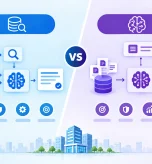
In the early phases of digital transformation, the software market was dominated by Horizontal SaaS—broad, general-purpose platforms designed to serve everyone from real estate agents to manufacturers. The philosophy was simple: one codebase, millions of users. While this model democratized access to technology, it created a significant ceiling for enterprise efficiency, particularly as organizations began investing in Vertical SaaS Development to support more complex operational needs.
Today, as industries mature and operational complexities grow, the one-size-fits-all approach is no longer sufficient.
As of January 2026, the paradigm has shifted. Leading enterprises are moving away from generic tools that require endless customization and toward Vertical SaaS—niche, industry-specific software architectures designed to solve the distinct problems of a single sector. This transition is not merely a technical preference; it is a strategic imperative for organizations aiming to secure competitive advantage in a crowded market built increasingly on industry software.
The Limits of Horizontal Architecture
The fundamental flaw of horizontal software lies in its breadth. A generic CRM, for instance, treats a patient, a retail customer, and a logistics vendor as identical data points. To make such a system work for a specific industry, enterprises are forced to invest heavily in configuration layers—expensive, fragile customizations that sit on top of the core software.
This creates operational friction:
- Workflows are bent to fit the software, rather than the software supporting the workflow.
- Data remains siloed because the system lacks semantic understanding of industry-specific metrics.
For the modern enterprise, the cost of this friction—measured in lost productivity and delayed decision-making—is unsustainable.
Vertical SaaS reverses this equation. It is built with Day One Utility, embedding industry-specific logic, compliance standards, and workflows into the core architecture. It does not just store data; it understands the context of that data, delivering far more value than traditional enterprise application development services ever could in isolation.
Strategic Application: Transforming Healthcare Delivery
The healthcare sector presents the clearest case for the necessity of vertical solutions. Generic video conferencing tools and broad-spectrum scheduling apps fail to address the nuance of clinical workflows, patient privacy requirements such as HIPAA or DPDP compliance, and the triage process that underpins effective healthcare workflow automation.
In a recent engagement with a leading healthcare provider and telemedicine startup, the challenge was not simply enabling video calls—commodity software could already do that—but digitizing the entire patient journey from intake to diagnosis.
We engineered a custom telemedicine ecosystem built around a Virtual Clinic model. Unlike generic tools, this platform included:
- A specialized triage algorithm that pre-screened patients before physician consultation
- Secure, encrypted storage of medical history accessible in real time during consultations
The Impact:
By moving to a vertical solution, the provider significantly reduced lobby wait times and administrative overhead. The software acted as an operational lever, optimizing physician availability and expanding access to rural patients. This level of workflow integration is impossible with off-the-shelf horizontal platforms.
Redefining Retail: The Algorithm of Personalization
In retail and e-commerce, the battleground has shifted from availability to hyper-personalization. Generic e-commerce platforms offer inventory management but lack the logic required for niche product categories supported by modern inventory management SaaS.
This limitation became evident while working with a North American pet food retailer operating in specialized pet nutrition. A standard add-to-cart model failed to support customization based on breed, age, weight, and health conditions.
We developed a Vertical SaaS inventory and sales platform powered by a custom nutritional algorithm:
- Customers input pet-specific data
- The system calculates caloric and nutritional requirements in real time
- A personalized meal plan is generated for each pet
The Impact:
The experience shifted from transactional to consultative. The platform captured high-fidelity customer data, increasing retention and average order value. A generic e-commerce wrapper could not support this level of algorithmic complexity without failure.
Education Technology: Scaling Engagement Safely
The EdTech sector requires the scalability of social platforms combined with institutional-grade safety and structure. Horizontal communication tools lack the guardrails necessary for student-teacher interaction.
Working with a US-based EdTech innovator, Rayblaze addressed student retention by building a secure, automated messaging platform aligned with the learning lifecycle and powered by modern EdTech platform architecture.
The system monitors student progress and uses intelligent automation to engage learners proactively. Unlike open social platforms, this vertical solution enforces strict security, hierarchy, and compliance standards.
The Impact:
The platform delivered a measurable increase in engagement, reducing drop-off rates while maintaining a safe and professional learning environment.
The Technological Backbone of Vertical SaaS
Building vertical software requires a shift away from monolithic systems toward modular and microservices-based architectures.
- Backend Logic: Strongly typed languages like Go and Java to manage complex industry logic reliably
- Data Architecture: Hybrid SQL and NoSQL models for structured and unstructured data such as medical imaging or telemetry
- API-First Design: Seamless integration with legacy ERPs like SAP and Oracle
The Future is Deep, Not Broad
As we move through 2026 and beyond, the convergence of artificial intelligence and vertical SaaS will widen the gap between generic and niche software. Vertical AI models trained on industry-specific data outperform generic models by eliminating context loss and hallucination.
By owning the vertical stack, enterprises control the data quality required to train superior AI systems.
For decision-makers, the choice is clear:
- Horizontal software offers a low barrier to entry but a low ceiling for performance
- Vertical SaaS delivers the depth required for automation, compliance, and true digital transformation
In an economy that rewards precision, the software that wins is the software that understands your business as well as you do.
If you believe your business can benefit from Vertical SaaS development, talk to us now.